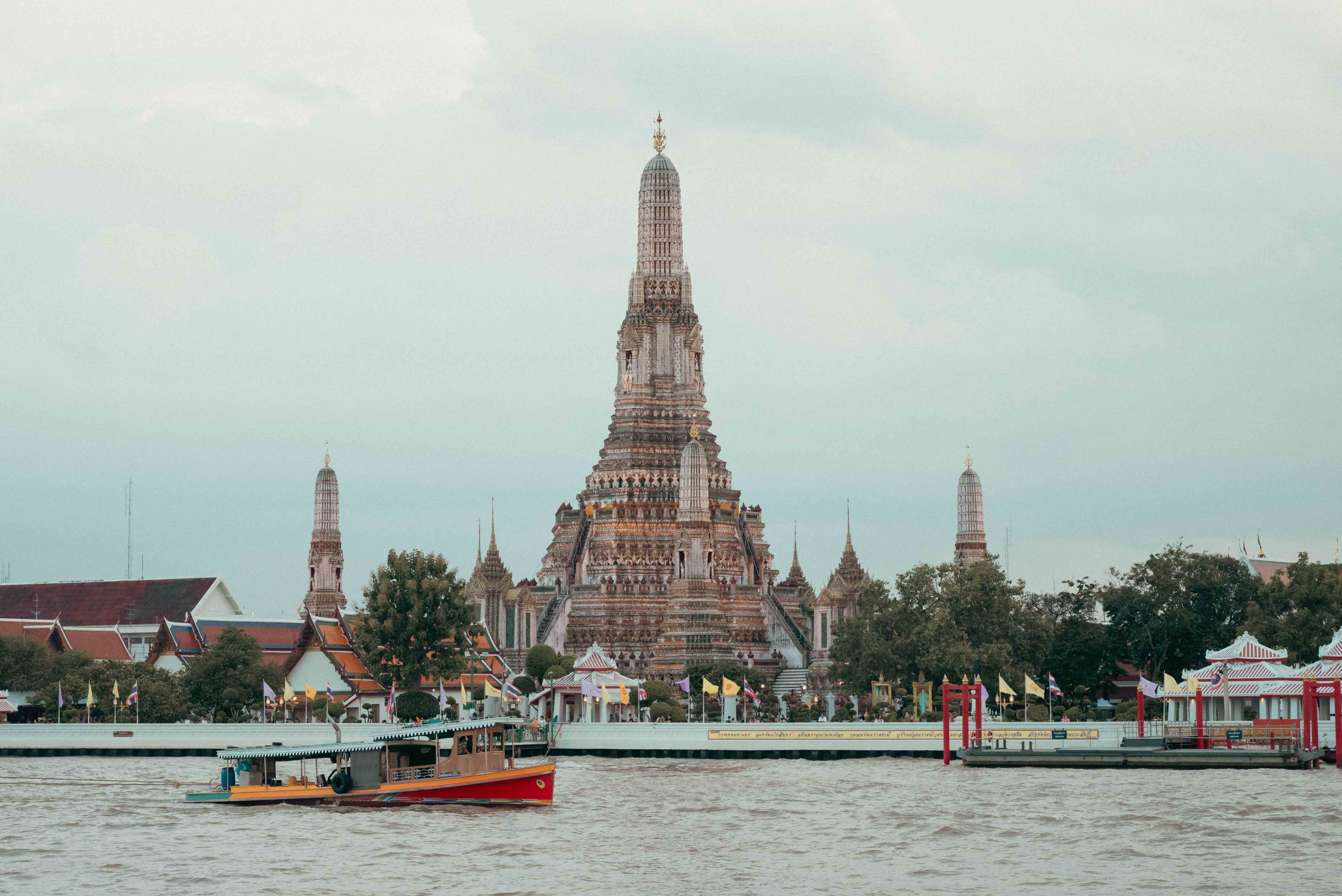
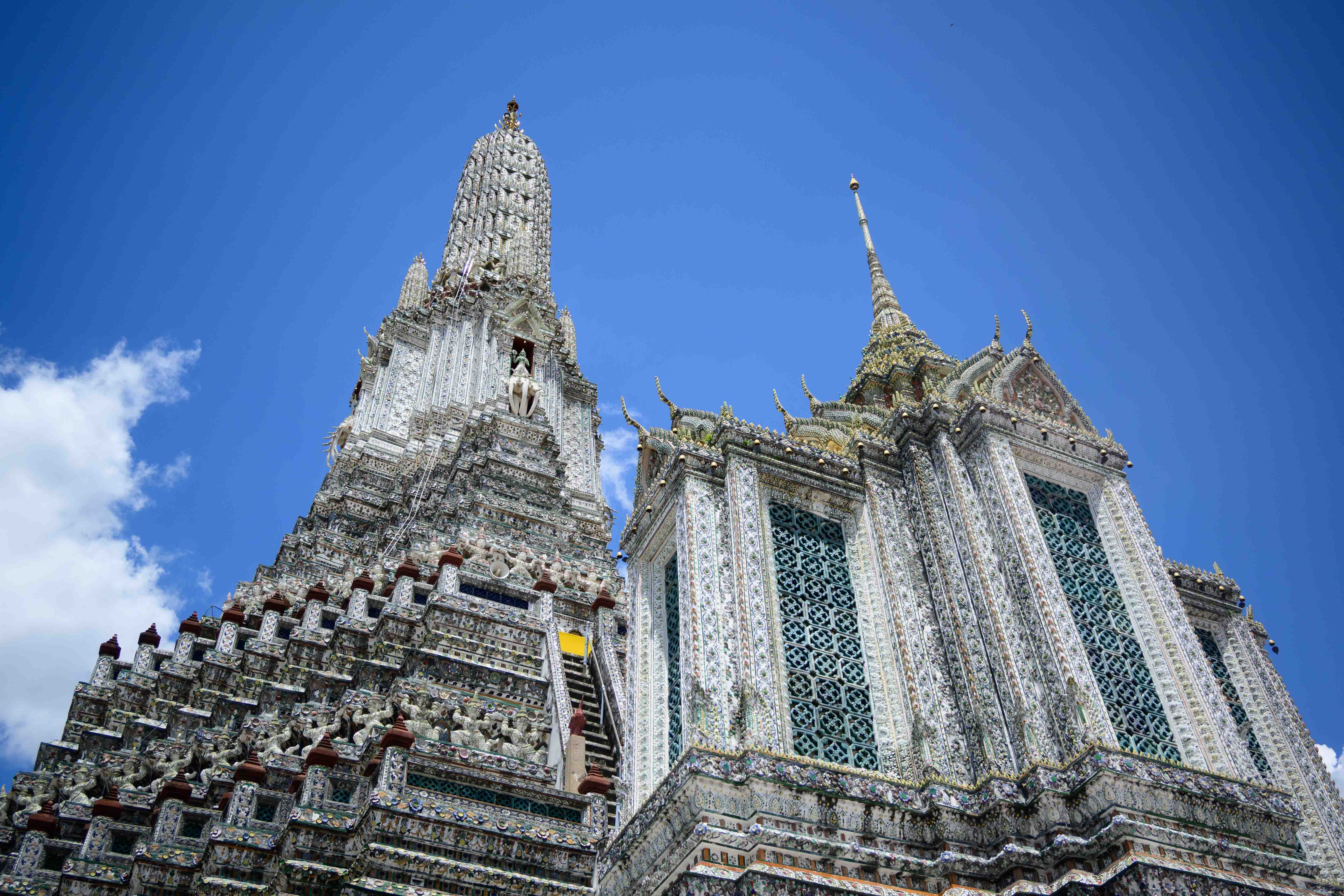
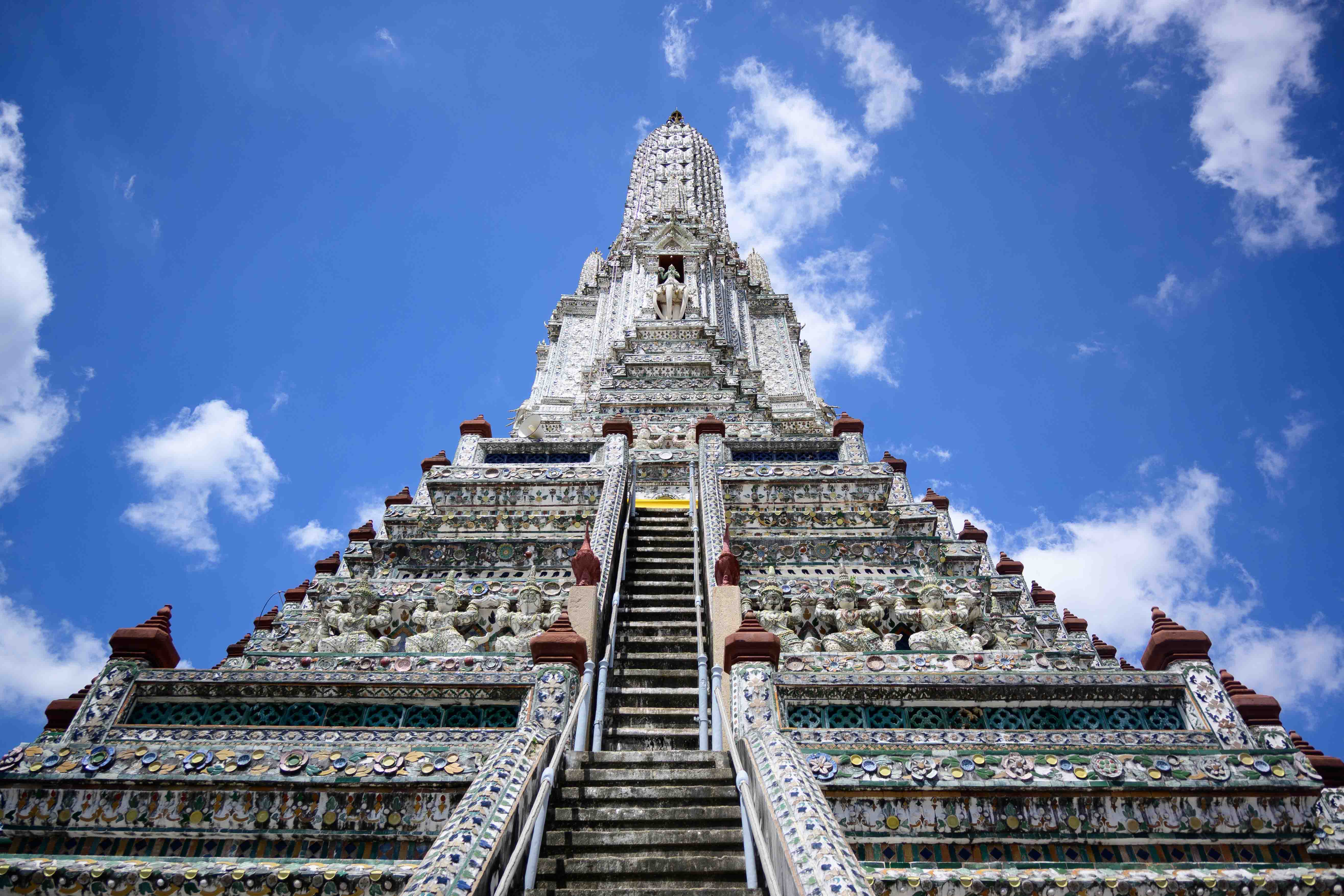
The white prang of Wat Arun is a stunning example of Thai craftsmanship and architecture, making it a site well worth preserving and appreciating. Believe us — it’s hard not to fall in love with this place. The most magical time to view the temple is at sunset, when the soft golden light enhances its beauty, creating a truly unforgettable sight.
•The History and Significance of Wat Arun.The Wat Arun Ratchawararam you see today did not come into being easily. It is an ancient temple originally built during the Ayutthaya period and was first known as “Wat Makok.” During the reign of King Taksin the Great, the temple was renamed “Wat Chaeng” (Temple of Dawn). Later, during the reign of King Rama II of the Chakri Dynasty, the temple underwent significant restoration and was renamed “Wat Arun Ratchatharam.”
In the reign of King Rama IV, further restorations were ordered, and the temple was given its current full name: Wat Arun Ratchawararam Ratchawaramahawihan.
Wat Arun holds great historical and religious importance. It is classified as a first-class royal temple (Ratchaworamahawihan) and is located within the area of the former royal palace during the Thonburi period. It once housed the Emerald Buddha (Phra Phuttha Maha Mani Rattana Patimakorn) — Thailand’s most revered Buddha image — before it was moved to Wat Phra Kaew in the Grand Palace when Bangkok became the capital.
The temple’s rich history and royal associations make it one of Thailand’s most significant and revered religious sites.
💡Things to know before you visit to the Temple of Dawn. Dress modestly (not short or tank tops)
💰Admission fee 50 baht
MRT
•Take the MRT Blue Line to Sanam Chai Station and leave by the exit no.1. •Walk to Tha Tien Pier. •Take the ferry across the Chao Phraya river to the Temple of Dawn.